Role
Strategy, UX research, interaction model, concept development, and final presentation.
Project · Hackathon · 2018
A 48-hour Kyoto hackathon concept exploring how a physical, context-aware system could help tourists discover unexpected local experiences.
Tourists with unplanned time could search Google or TripAdvisor, but those tools often returned the same ranked attractions. Our four-person team proposed a familiar alternative: a gacha machine that offered an unexpected local suggestion at the moment someone wondered, “What now?”
The central design question was what a tourist should have to answer and what a future system could infer from context. Over 48 hours, we researched and simulated that experience. GachaBot remained a hackathon concept, not a launched recommendation engine.
Role
Strategy, UX research, interaction model, concept development, and final presentation.
Team
Four-person hackathon team.
Research
Intercept conversations and simulated concept interactions with approximately 12 tourists, approached individually and in groups.
Outcome
Paper interaction, physical machine prototype, clickable Axure demonstration, recommendation-slip concept, and final pitch.
Status
48-hour concept; contextual inputs and recommendation generation were proposed rather than technically implemented.
Context
The problem was not a shortage of recommendations. It was finding something local, timely, and a little surprising without sorting through another generic list. The hackathon took place at Kyoto Institute of Technology as the final event of Kyoto Startup Summer School.
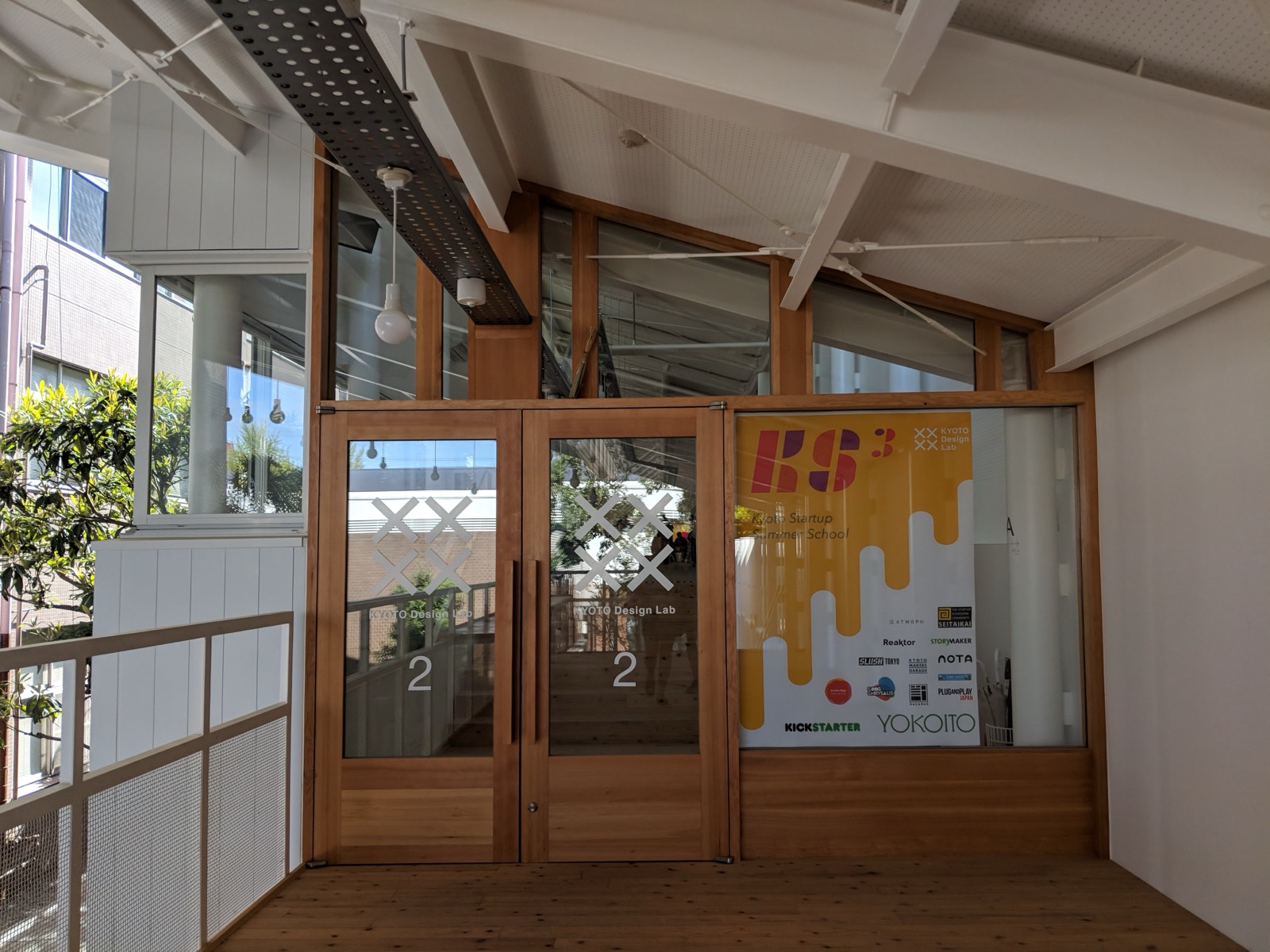
Kyoto Institute of Technology · Kyoto Startup Summer School · the setting for the 48-hour hackathon
Field research
We went to Kyoto Station, Nishiki Market, and tourist-information locations, where unplanned time and travel decisions naturally arose. We spoke with approximately 12 tourists, some individually and some in groups. These were intercept conversations and concept-feedback interactions, not usability tests.
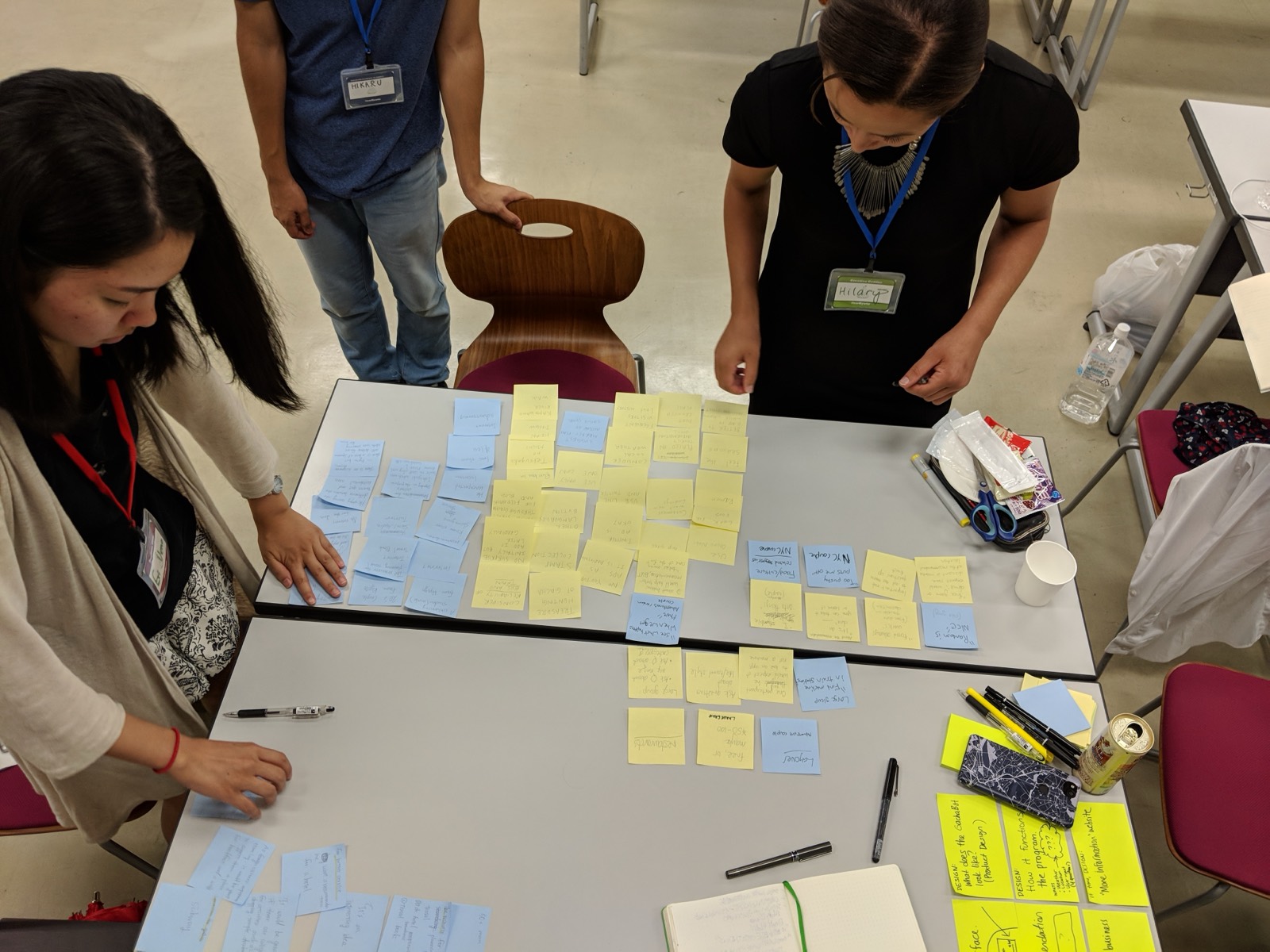
Team debrief after field conversations
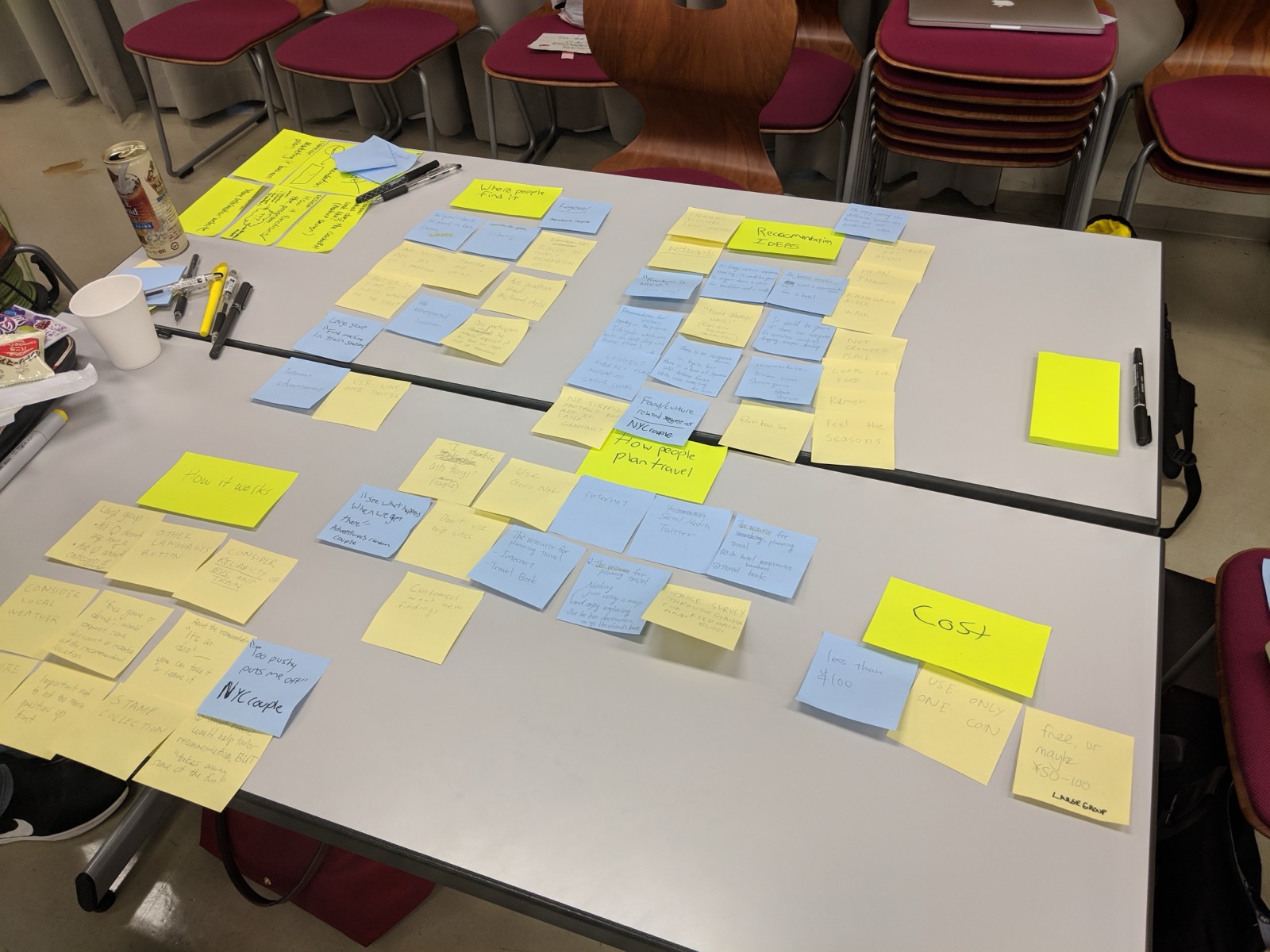
Synthesis and affinity grouping
Simulating the experience
After explaining the concept without steering tourists toward a positive response, we walked them through a low-fidelity simulation. They answered questions, rolled a large die to represent the random gacha interaction, received a capsule, opened its paper recommendation, and then discussed their reaction. The simple props let people experience the sequence rather than react to an abstract pitch.
These responses were directional, not evidence of broad demand. They supported the premise that some tourists welcomed a playful way to encounter something they had not already searched for. Participants also made the need for useful description and navigation information clear.
Interaction model
We proposed three questions about available time and group composition. Field conversations reinforced that whether children were present could materially change a useful recommendation. The team adopted 30 seconds as a design target for the interaction, so every question had to earn its place.
A clickable Axure demonstration represented this question flow. It demonstrated the interaction model; it was not connected to a working recommendation engine.
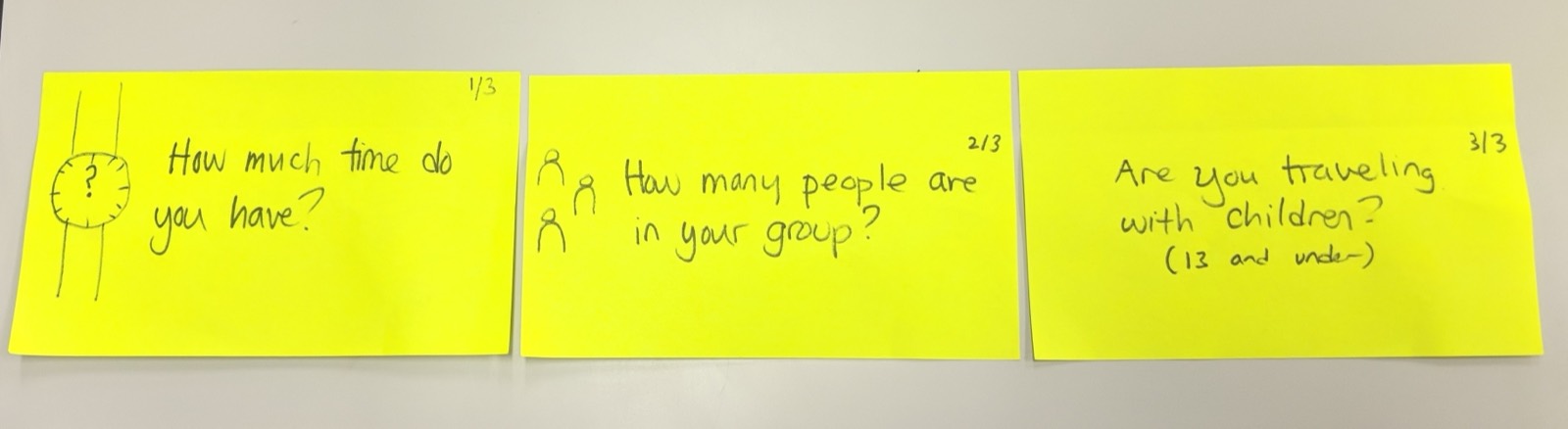
The three proposed questions during the working session
Context-aware logic
The future system model combined tourists’ answers with location, weather, traffic, date, and time. Those contextual inputs could prevent recommendations that were closed, unsuitable for the weather, or impractical to reach. The hackathon prototype demonstrated this logic; it did not connect to live environmental data or generate recommendations automatically.
Rapid prototyping
Once the question flow and output had taken shape, the team built a physical form for the final pitch. The recommendation slip also evolved from a handwritten prop into a fuller concept with a photo, description, directions, and a QR code.
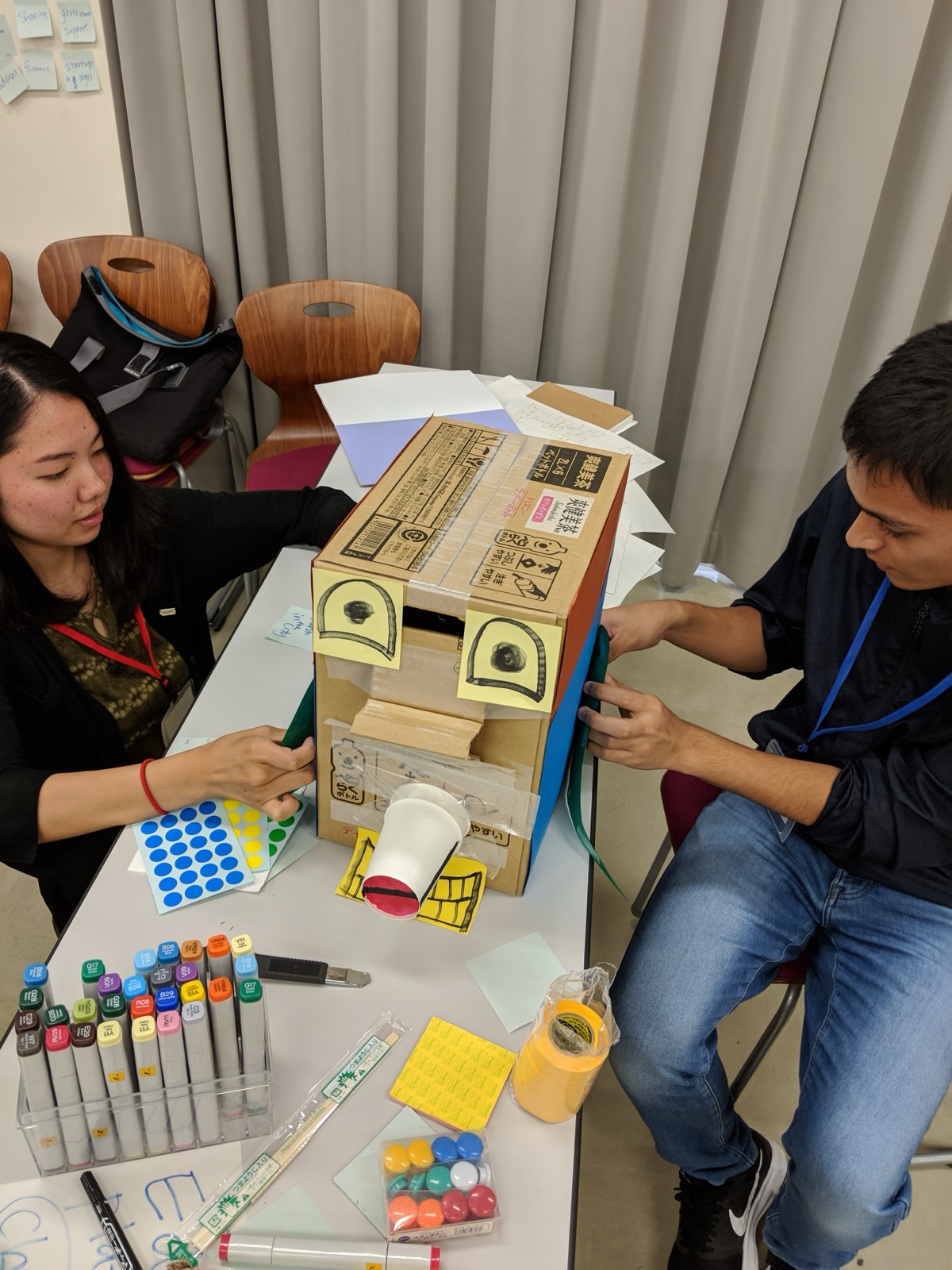
Building the physical hackathon demonstration—not a functioning automated recommendation machine
Recommendation slip · field simulation
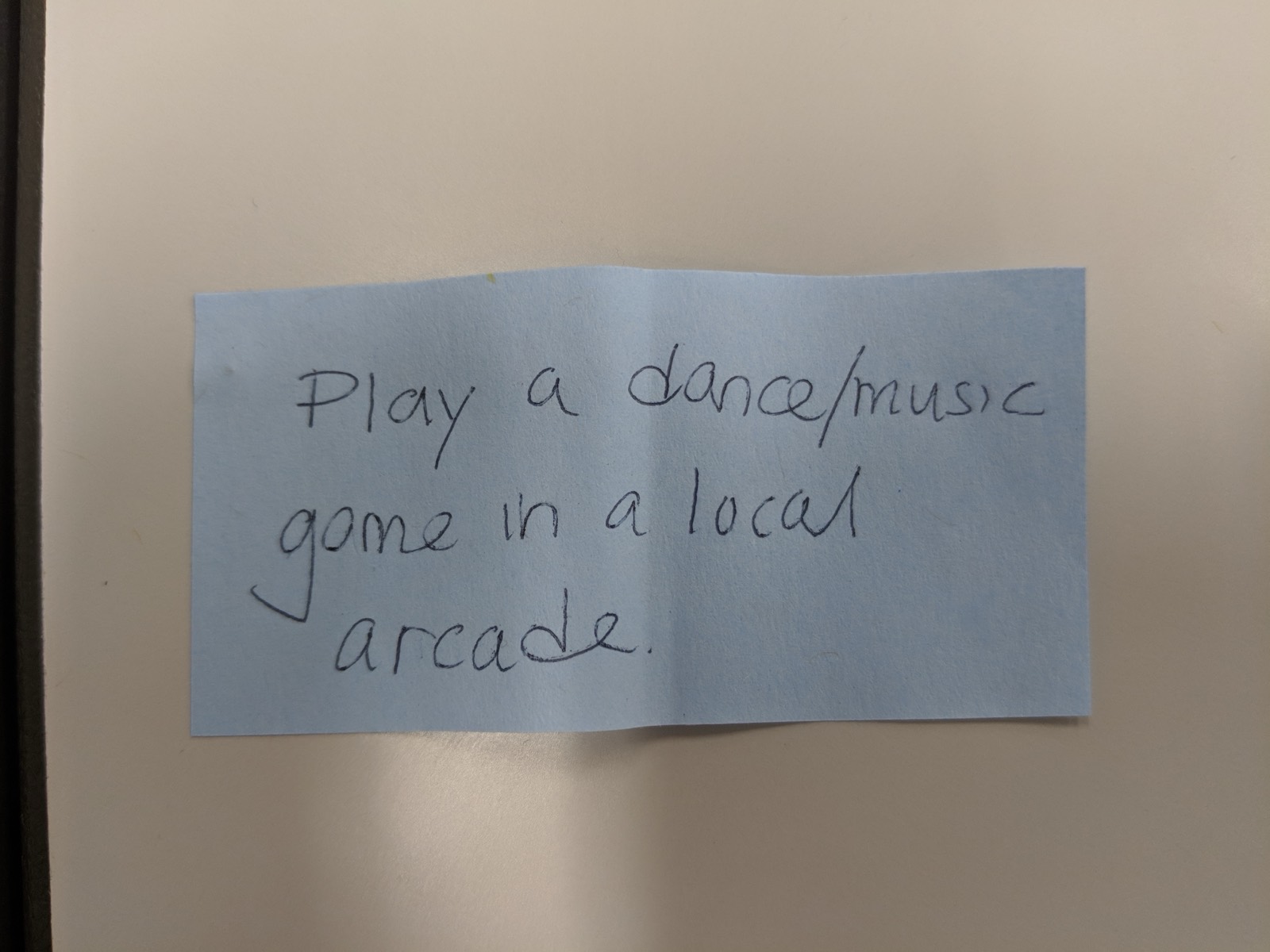
Paper recommendation used to simulate the experience
Recommendation slip · final concept
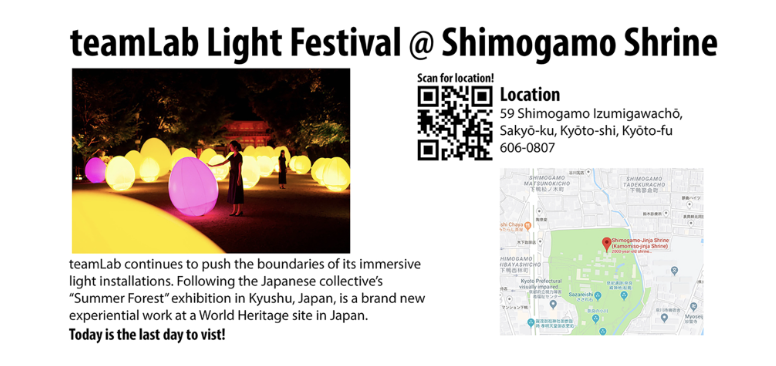
Expanded concept with description and navigation information
Design rationale
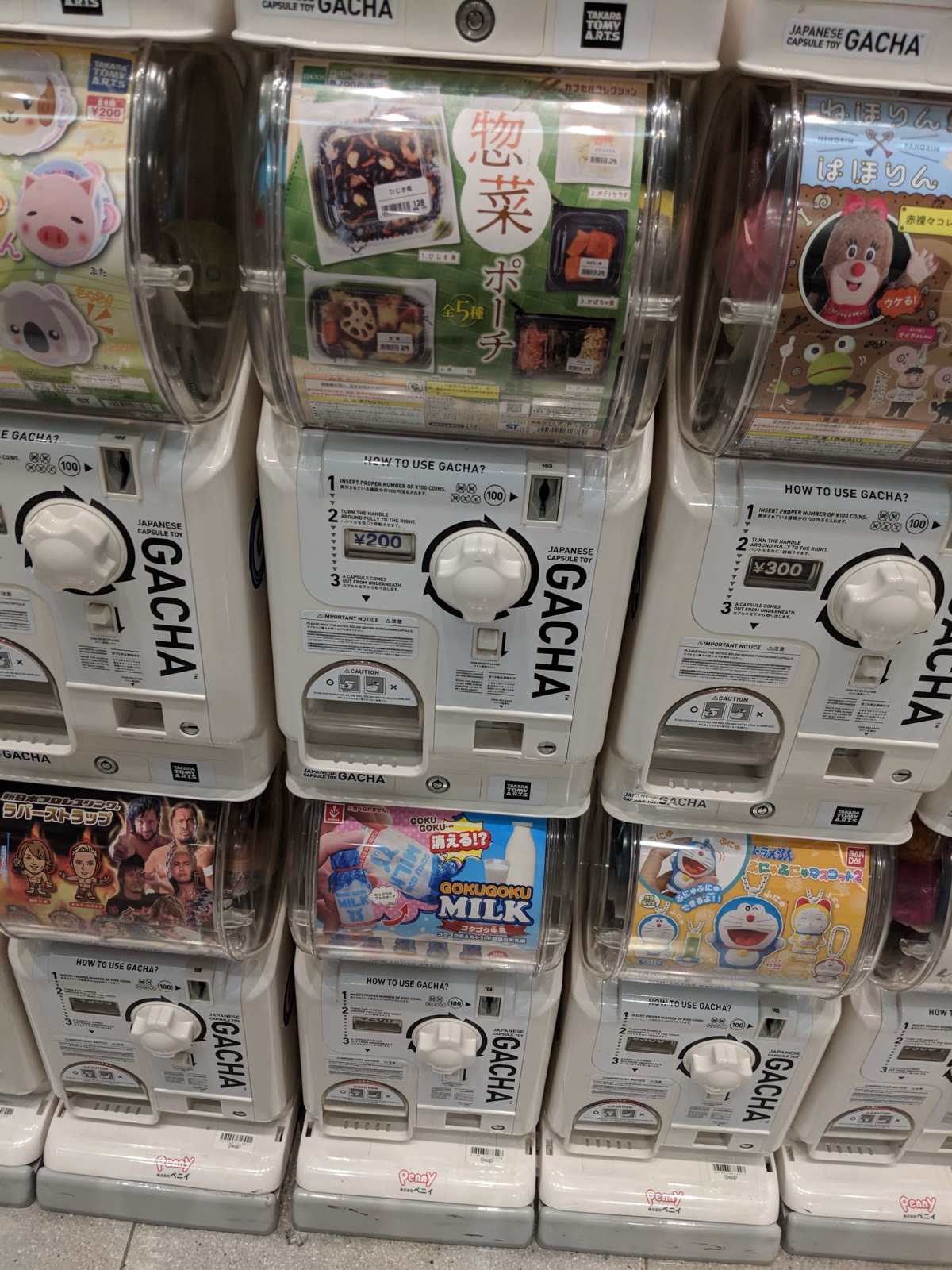
A familiar interaction and physical presence in Japan
Gacha machines were already familiar in Japan, easy to recognize, and playful by design. A physical machine could stand at the moment the need arose—in a station or tourist-information location—without requiring someone to discover, download, and remember an app. Its random reveal also made an unexpected recommendation feel like serendipity rather than an unexplained algorithmic choice.
What this demonstrates
01
The team approached tourists where unplanned time and travel decisions naturally arose.
02
Questions, a die, a capsule, and a paper recommendation made the concept tangible enough for tourists to react to within the hackathon timeframe.
03
Tourists supplied time and group details, while the proposed system model used location, weather, traffic, date, and time to reduce interaction effort.
04
A physical gacha machine fit the point of decision and made receiving an unexpected recommendation feel playful rather than arbitrary.
Related work
A research-driven graduate capstone exploring how self-directed cooks could retain knowledge, reflect on experience, and build skills over time.
Enterprise intranet information architecture (IA), user research, and interaction design for 45,000+ employees across global markets.
An AI-native business of one testing how far a single operator could take a real business across product, commerce, content, and operations.